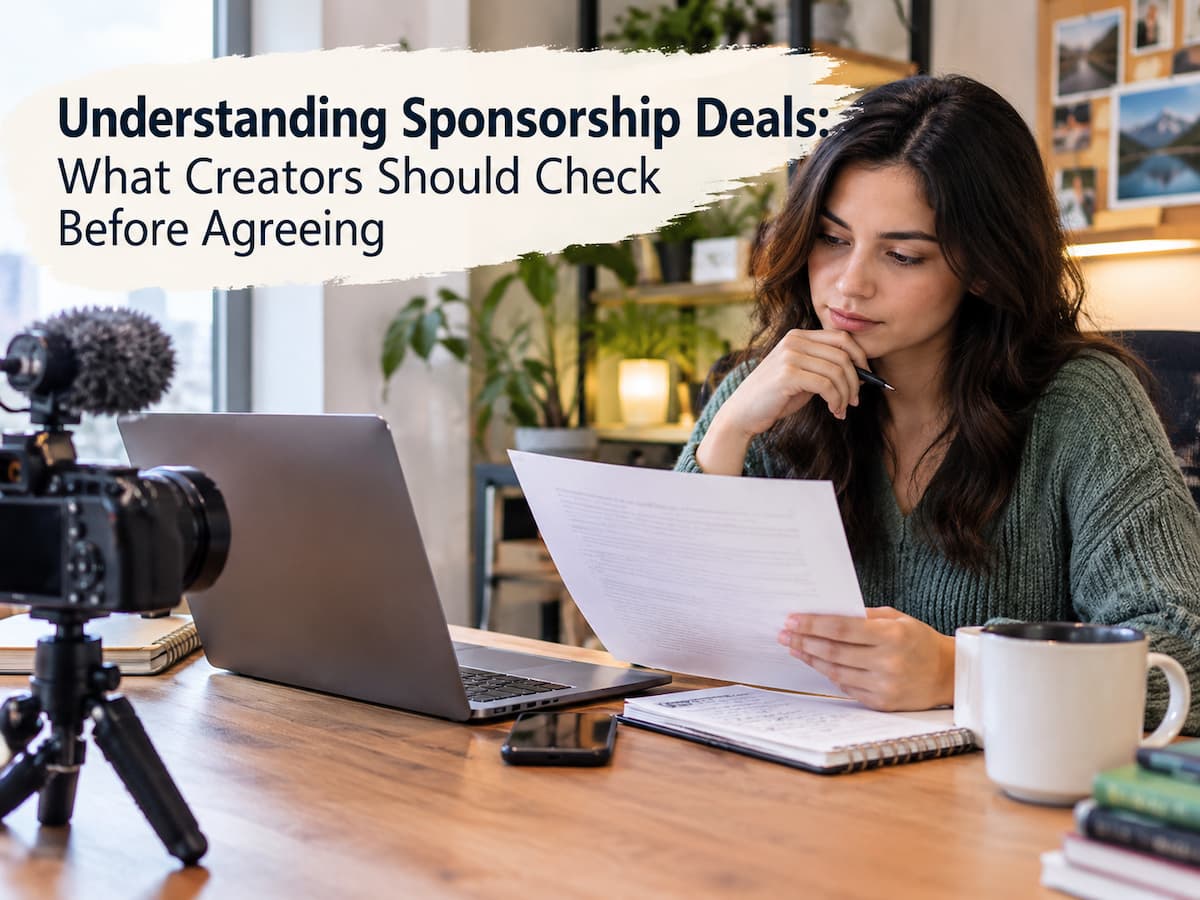
Sponsorships can appear straightforward. A creator distributes material after a brand pays and describes what it wants promoted. Sponsorship agreements can have several terms that influence the creator once the payment is discussed. The brand may want specific content, clearance before publication, rights to reuse the finished video, limits on competing products, or a publishing timetable. Some agreements are simple, while others heavily burden the maker. Thus, the most significant aspect of a sponsorship is not the quantity. What the creator gives up for that payment and how much influence the brand has over the content determines the deal’s value. Creators can clarify expectations, negotiate key conditions, and avoid misconceptions that might be difficult to address after production begins by thoroughly reading the agreement before accepting it.
Know What the Brand Wants
Creators should know what the brand expects before considering a sponsorship. Depending on the agreement, “one sponsored video” can mean several things. The brand may receive a dedicated film, a brief mention in an existing video, several social posts, product demonstrations, description links, or other promotional material. Depending on such criteria, creative work can vary greatly. A creator should look beyond the campaign headline to determine what content they must produce and deliver. Clarify whether the creative writes the script, films, edits, photographs, captions, revisions, or other production chores. When deliverables are clear enough that both sides specify the finished obligation, sponsorship evaluation is easier.
Payment Terms Matter as Much as Amount
The headline payment of a sponsorship offer may be appealing, but it does not tell the complete story. Creators should know when, how, and under what conditions they will receive cash. A campaign that needs hours of filming, editing, revisions, and communication may be more laborious than a social mention. Instead of using informal chats or assumptions, the creator should ensure the agreement precisely states the pay. Responsibility for planned campaign expenses, including production, travel, props, and other purchases, should be apparent. A creator may need to finish a lot of work before receiving payment; therefore, timing is just as important as amount. Clear payment conditions help establish if the sponsorship matches the creator’s business workflow.
Examine Content Approval Requirements
Since their reputation and marketing message are at stake, brands desire some control over sponsored content. How far that control goes is key. A brand may check content for factual accuracy, disclosures, trademarks, and campaign requirements under an agreement. Another agreement may allow the brand to request adjustments for nearly any reason. Those combinations can vary the creator’s workload. A basic sponsorship can require multiple edits if modifications are limitless or the approval process is confusing. Creators should know how many revisions are allowed, what modifications are allowed, and who approves. It’s helpful to distinguish between appropriate corrections and requests that significantly alter the creator’s vision. A clear approval process guides both parties from the earliest draft until publication, rather than leaving the inventor to alter freely.
Consider Usage Rights
What the brand can do with the content once the author publishes it is often neglected in sponsorship agreements. A brand may request permission to repost, display on its website, utilize in ads, change, or continue utilizing a creator’s campaign film. These rights can be valuable, especially for sponsored advertising or long-term commercial use. The agreement should specify what content the brand can use, where, how long, and whether the artist has exclusive rights or a restricted license. This information is important because the initial sponsorship payment may have been for generating and publishing the content, not for commercial usage by the brand. Usage rights should be considered part of the deal’s worth, not a legal detail at the end.
Exclusivity Influences Sponsorship Futures
A creator can’t work with competitor brands for a while under an exclusivity deal. That may be fair in some campaigns, especially when a business pays for category exclusivity, but the restriction must be recognized before consenting. A short restriction on a narrowly defined rival product area is distinct from a broad clause that bars the developer from taking many sponsorships. Timing matters too. A restriction that lasts months after the campaign could preclude the designer from accepting future offers. Creators should examine whose future relationships may be affected and if compensation reflects that limitation. If the agreement utilizes terms like “competitor,” “competing product,” or “similar brand,” they should be explicit. When exclusivity eliminates other opportunities, a sponsorship becomes less appealing.
Deadlines Should Go Beyond Publication
Creators naturally pay attention to sponsored content launch dates, but the production calendar may have prior deadlines. Before publishing, a brand may need an idea, plan, script, rough cut, draft caption, product demonstration, or preview. Unless those steps are clearly specified, the developer may end up with a constrained timeframe that was not in the original offer. The agreement should make the timeline reasonable for the work. Product delivery may affect the schedules. Delayed product deliveries should automatically breach the timetable only if a creative cannot begin filming. A well-defined schedule should include production rather than just publication. This is especially important for authors who handle sponsorships and regular content because an unachievable campaign deadline can disrupt their publishing schedule.
Understand Creative Control
A creator’s style, voice, presentation, or subject understanding attracts followers. Sponsorship works best when the advertising message fits the established style. Creators should know their creative freedom before signing. Some brands supply talking points or needed statements but let creators present the content. Some offer lengthy scripts or tight guidelines. Neither option is bad, but the author must know the campaign kind. A highly structured campaign may irritate a designer who wants unlimited flexibility, while an impromptu approach may disappoint a brand that wants a precise presentation. Discussing creative expectations early can prevent both parties from assuming something they never committed to. Not eliminating brand input, but defining where brand requirements end and creative judgement begins.
Do Not Ignore Sponsored Content Disclosure
Disclosure obligations vary by jurisdiction, platform, and relationship when publishing paid or otherwise funded promotional content. The US Federal Trade Commission advises that material endorser-brand ties should be stated clearly and publicly. Platform-specific rules may apply. Instead of thinking a label is sufficient, creators should investigate the guidelines for their circumstance because disclosure obligations differ by location and audience. An agreement may stipulate disclosure language, but a brand’s preference does not substitute the creator’s responsibility to follow rules. Creators should know what relationship is revealed, where it will appear, and whether the audience will understand it before releasing sponsored content. Transparency safeguards audiences’ capacity to understand commercial content.
Special Care for Product Claims
A sponsorship might be tricky when a brand wants product claims from the author. The brand may give the creator talking points, marketing language, or remarks to include. Not all proposed claims should be reiterated. Creators should know what they’re saying and if it’s appropriate for their audience and product. Products in health, finance, safety, performance, or other areas where false statements might cause major issues require extra caution. A creator doesn’t need to be an expert in every product category to accept a campaign, but they should avoid making unsupported claims. If a brand expects precise claims, asking for clarification or supporting evidence before production may be better than discovering a problem after filming. Even with tempting sponsorship compensation, audience trust must be protected.
Cancellation and Termination Terms Matter
Only a few sponsorships are published. A brand may adjust its campaign, cancel a product launch, encounter internal delays, or determine its content no longer suits its marketing plans. The creator may also face obstacles. If the campaign finishes early, a sponsorship agreement should state if work accomplished is still owed. When the creator has spent time researching thoughts, buying production supplies, capturing footage, or passing down other possibilities for the campaign, this is crucial. Termination conditions differ, so creators should evaluate the practicalities before agreeing. A contract that clearly specifies cancellation is easier to manage than one where both parties discover their expectations when something goes wrong. Not assuming a campaign will fail, but making sure both parties know what happens if circumstances change.
Read the Agreement as a Whole
The full sponsorship deal is the safest approach to analyze pay, not just one enticing number. Imagine a brand pays a big sum for a sponsored video. It may seem worthwhile at first. The deal’s value may differ from the headline price if it needs several changes, wide usage rights, category exclusivity, several social posts, a short deadline, and months of restrictions on rival sponsorships. A more appealing option may be another offer that has a smaller cost, restricted deliverables, appropriate usage rights, no broad exclusivity, and a controllable timeframe. Thus, sponsorship evaluation compares obligations and pay. Producers should consider production time, audience, rights, limits, and administrative work. Reviewing the whole deal helps determine if it fits the creator’s business.
Ensure Clear Negotiations Before Production
Negotiation should not contradict a brand. Making ambiguous expectations plain before work begins is often enough. Discuss a restricted revision request from the creator. The brand can define usage rights beyond the creator’s channels. If an exclusivity provision is overly wide, clarify the category or term. Written communication is useful because it records joint discussions. Once the final agreement incorporates those parameters, there is less room for debate concerning promises. Creators shouldn’t use informal communications for essential tasks either. A polite talk might set expectations, but the formal agreement should reflect the contract. The more detailed the agreement before manufacturing, the less probable any side will uncover an unforeseen necessity.
A Sponsorship Should Safeguard the Creator’s Future
The most valuable sponsorship might not pay off immediately. A creator’s reputation, audience trust, material library, schedule, and financial prospects are valuable. Even if the pay is decent, a campaign that clashes with audience expectations may not work. Broad usage rights or exclusivity limits might also impact future prospects once the sponsored post leaves the creator’s primary feed. Creators shouldn’t reject every demanding deal. It involves understanding the whole cost of accepting the contract before agreeing. Sponsorship decisions should examine the campaign and what the deal enables or prohibits afterward. When deliverables, compensation, creative expectations, rights, constraints, deadlines, and cancellation terms are clear, the creator can make a decision based on the whole relationship, not just the payment.
Conclusion
Collaborations with sponsors can provide valuable opportunities for creators, but they should be viewed as business agreements, not simply as promotional partnerships. Compensation is only one part of the collaboration. Content delivery, deadlines, modification terms, creative control, usage rights, exclusive licenses, disclosure obligations, product descriptions, and cancellation clauses all influence the actual value and risks of the partnership.
Before entering into a collaboration, creators must carefully read the entire agreement to ensure they understand what content they are delivering, what revenue the brand receives, what payment methods and terms apply, and what restrictions apply after release. Any ambiguities must be resolved before production begins.
A good sponsorship agreement provides both parties with a clear picture of the collaborative project. This clarity is especially important for creators, as maintaining public trust and monitoring future collaboration opportunities is just as crucial as receiving compensation for the current project.
FAQs
1. Should creators negotiate sponsorship agreements?
Negotiation is sensible when key terms do not align with a creator’s expectations. Payment is only one aspect that can be discussed. Creators may also need to clarify content delivery, modification requests, usage rights, exclusivity restrictions, deadlines, or campaign requirements before entering into an agreement.
2. What are usage rights in a sponsorship agreement?
Usage rights refer to which actions a brand is permitted to take with the content created for the campaign. Depending on the agreement, these rights may relate to reposting, use on websites, advertising, editorial purposes, or other commercial uses. The scope and duration must be clear before an agreement is accepted.
3. Why are exclusivity clauses important?
Exclusivity clauses can limit a creator’s ability to collaborate with competing brands. The scope and duration of these restrictions can have a significant impact on future sponsorship opportunities, so creators must thoroughly understand both aspects before agreeing.
4. Can brands request changes to sponsored content?
Brands can negotiate content approval or request changes within the sponsorship agreement. Creators should understand what types of changes are permitted and whether there are limits on the number or extent of those changes.
5. What happens if the sponsorship is canceled after a creator has started work?
The answer depends on the specific terms of the agreement. The contract may clearly define the payment method in the event of project cancellation and whether compensation is paid for work already completed or fees. Creators must thoroughly understand the termination clauses before starting actual production.

Riley Bennett writes about content creation, streaming gear, and building efficient creator workflows at estergamer.com. After spending years testing equipment and figuring out what actually works versus what just looks impressive, Riley focuses on practical, no-nonsense advice for beginners starting from scratch. When not writing, Riley enjoys exploring new tech, refining home studio setups, and helping fellow creators skip the expensive mistakes that slow most people down. The goal is simple: honest guidance that gets real results without the marketing fluff.